
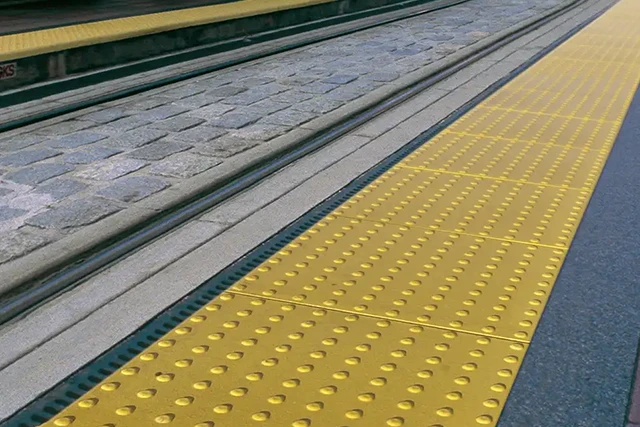
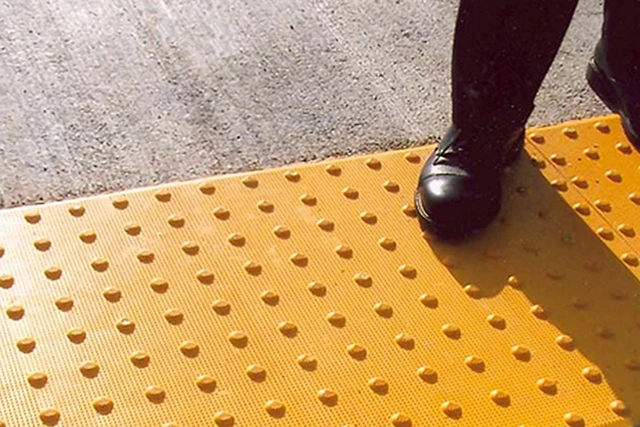
Truncated domes may be one of the smallest components on a construction project, but they’re also one of the most carefully inspected.
Their location, alignment, color contrast, spacing, and installation method all contribute to ADA accessibility compliance. A small installation error can require complete removal and replacement.
CCS installs ADA-compliant detectable warning surfaces throughout Amador, Calaveras, El Dorado, Sacramento, and San Joaquin Counties, coordinating installation with curb ramps, sidewalks, and concrete flatwork.
We verify ramp geometry, pedestrian travel direction, and placement requirements before installation begins.
Whether installing cast-in-place or surface-applied systems, the surrounding concrete is prepared to ensure proper fit and long-term performance.
Detectable warning panels are positioned according to ADA requirements for alignment, spacing, color contrast, and orientation.
Completed installations are reviewed to help ensure the warning surface is correctly located and ready for project inspection.
They’re ADA-required detectable warnings that let people with visual impairments feel the edge between a walkway and a hazard, usually at curb ramps.
Yes — detectable warnings are part of ADA accessibility requirements at curb ramps and transitions, and inspectors check the installation.
Yes. We install surface-applied detectable warnings on existing concrete as well as cast-in-place units in new work.
They need visual contrast with the surrounding surface so they’re detectable by sight as well as touch. We install to the contrast requirement.
Yes — we re-install detectable warnings to the correct standard so the site passes.
From site preparation to final construction, we create strong homes, business spaces, and property upgrades built for lasting value.
2026 © Comprehensive Construction Services website Developed & Powered by MYAIO


