
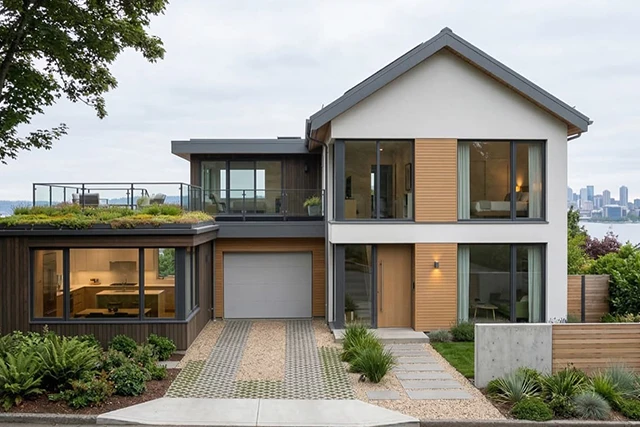

Not every project needs additional square footage. Sometimes remodeling an existing layout provides enough space, while other properties benefit from expanding outward or upward. Lot size, zoning, structural capacity, and long-term goals all influence which type makes the most sense:
Every addition is planned to connect with the existing structure while coordinating foundations, framing, roofing, plumbing, electrical, and HVAC systems for a finished result that feels like part of the original building, not bolted on:
That connection point is also where most addition budgets actually get decided. A straightforward room addition on a stable, accessible foundation is a fairly predictable project — the same addition on a sloped lot, or tied into a foundation that needs reinforcement first, changes the entire cost and timeline conversation:
That’s why we walk the existing structure thoroughly before giving a number anyone can actually rely on.
In most cases, yes. We sequence work to minimize disruption to the occupied portion of the home, though some projects require temporary utility shutoffs during specific connection points.
We source materials to match existing profile, texture, and color as closely as possible, and recommend a transition where an exact match isn't available.
Not always — it depends on lot size, foundation condition, and local zoning. Building up avoids losing yard space and can sometimes be more cost-effective than expanding the footprint.
From site preparation to final construction, we create strong homes, business spaces, and property upgrades built for lasting value.
2026 © Comprehensive Construction Services website Developed & Powered by MYAIO


