
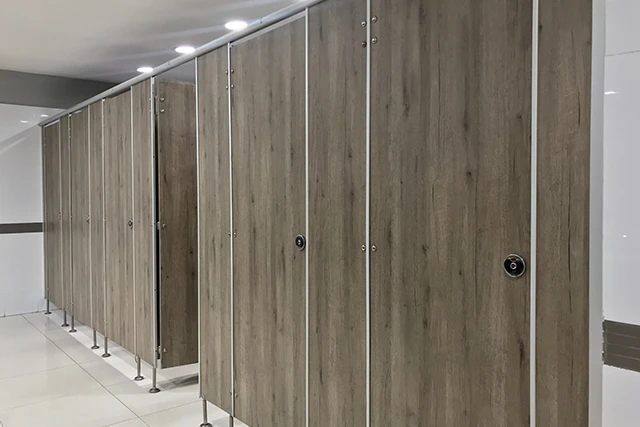
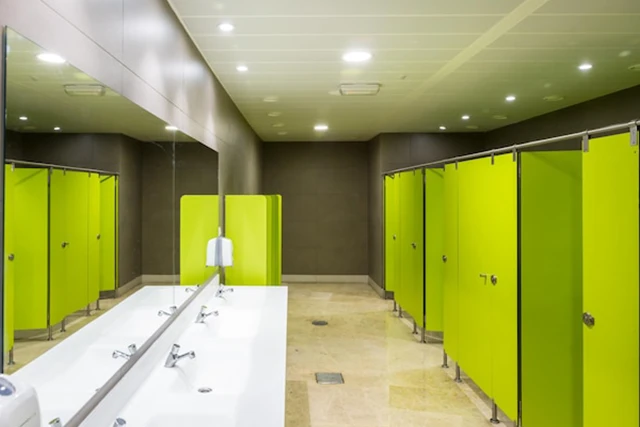
Solid plastic partitions don’t rust, don’t delaminate from moisture exposure, and shrug off impact damage that steel partitions dent and phenolic can eventually chip — which is why school districts and gyms specify it almost by default, while corporate offices can often get away with a lower-cost option:
Getting this layout wrong isn’t just a compliance headache, it usually means tearing out and reconfiguring partitions that were already installed, which is a far more expensive fix than reviewing the layout against current code before ordering material:
The cheapest partition material on the spec sheet is rarely the cheapest option over the building’s actual lifespan — a steel partition in a high-moisture gym locker room can need replacement well before an HDPE partition in the same location would even show wear:
A standard multi-stall restroom typically takes one to three days depending on the number of stalls and whether existing partitions need to be removed first.
In multi-stall restrooms, we can often phase the work to keep some stalls available during installation.
Most commercial and public restrooms require at least one ADA-compliant stall meeting specific dimension and clearance requirements.
From site preparation to final construction, we create strong homes, business spaces, and property upgrades built for lasting value.
2026 © Comprehensive Construction Services website Developed & Powered by MYAIO


