
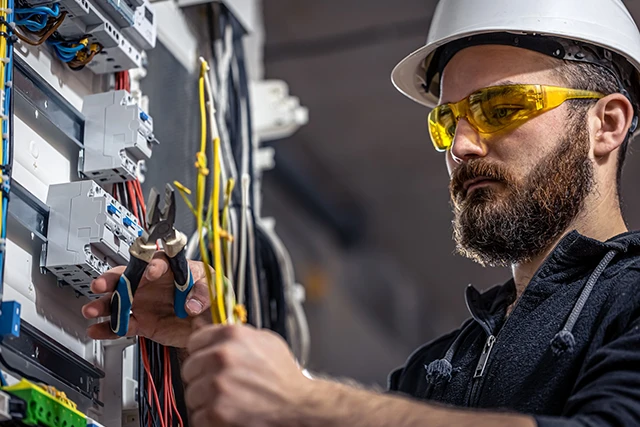
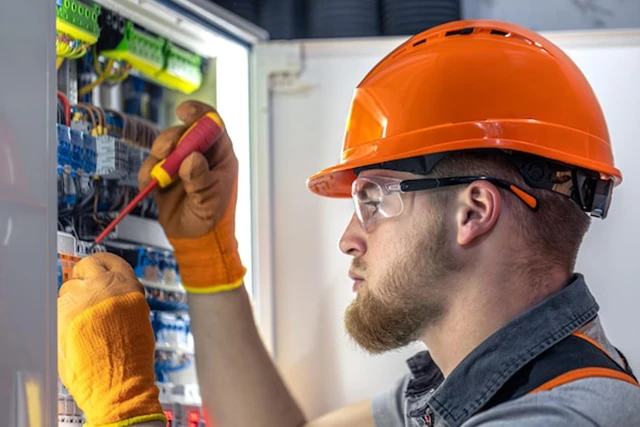
Electrical capacity is one of the hardest things to add once a project’s done. A panel sized exactly for today’s needs can leave you stuck the moment you want to add a heat pump, an EV charger, or a home battery a few years down the road. Every building has different electrical demands, and we design with realistic headroom for what a building is likely to need next rather than just what’s on the plans today:
None of this costs much extra at the rough-in stage. A slightly bigger panel and a stubbed-out conduit run are cheap when the walls are already open — going back in for the same thing five years later, after drywall, paint, and landscaping are all in place, costs a lot more and usually means real demolition.
Standard electrical work covers panels, circuits, outlets, and lighting, the power that runs your appliances and keeps the lights on. Low voltage is a separate but related system: security and alarm wiring, cameras, access control, and structured cabling for networking and audio/video. Running both during the same rough-in phase keeps low-voltage cabling concealed and properly routed instead of surface-mounted later. Some of the most common planning mistakes we see:
Kitchens especially have changed a lot in the last decade. Between induction ranges, multiple small appliances, and home offices that didn’t used to exist, the circuit count that was standard fifteen years ago often isn’t enough anymore.
Electrical rough-in gets coordinated with framing, plumbing, and mechanical trades to confirm routing and clearances ahead of time, so the electrical system supports the rest of the building instead of quietly becoming the bottleneck a few years from now.
It usually comes down to available amperage and physical breaker space, both of which we can evaluate during a panel inspection. If there's not enough headroom, a panel upgrade is often more straightforward than people expect.
We wire infrastructure for smart home systems, including low-voltage runs for cameras, access control, and networking, as part of the same rough-in as standard electrical.
For most repairs and additions, yes, we isolate the affected circuits rather than killing power to the entire panel. Full panel replacements do require a temporary outage, which we schedule and communicate in advance.
From site preparation to final construction, we create strong homes, business spaces, and property upgrades built for lasting value.
2026 © Comprehensive Construction Services website Developed & Powered by MYAIO


