
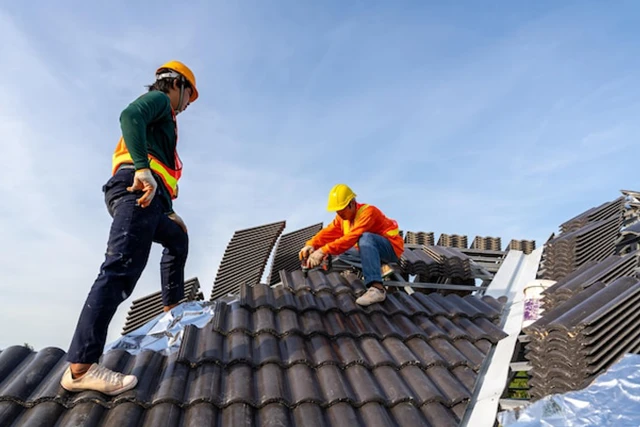

If you’re only planning to own the building another five or ten years, the cheapest material that meets code might genuinely be the right call. But if this is the long-term home or the building you’re growing a business out of, the math usually flips, and a higher upfront cost on metal or tile pencils out over time:
None of these signs mean disaster on their own, but together, or ignored long enough, they usually mean a call is overdue. Most of the roofing problems we get called out for also trace back to a handful of avoidable mistakes made during a prior install:
A roof doesn’t really work in isolation. It depends on the gutters that carry water off it and the waterproofing where it meets the walls below, so we sequence roofing, gutters, and waterproofing together. For properties in Wildland-Urban Interface zones, we also design and install fire-rated roofing assemblies that meet WUI code requirements.
Most residential roofs take one to three days for tear-off and installation, depending on size and material. Tile and standing seam metal generally take a bit longer than asphalt shingle.
In some cases, code allows one layer of shingles over an existing layer, but we generally recommend a full tear-off, since it's the only way to actually inspect and repair the deck underneath.
It depends on the material and manufacturer, but most warranties split into a manufacturer's material warranty and a separate workmanship warranty from us covering the installation itself.
It depends on how widespread the damage is and the roof's age going in. Isolated damage on a newer roof is often a straightforward repair, while damage near the end of a roof's service life often makes more sense to address with full replacement.
We can, with proper scheduling and weather monitoring, planning tear-off sections carefully to avoid leaving a roof exposed overnight during active rain.
From site preparation to final construction, we create strong homes, business spaces, and property upgrades built for lasting value.
2026 © Comprehensive Construction Services website Developed & Powered by MYAIO


