
Living water features — planted, balanced, and built to thrive.
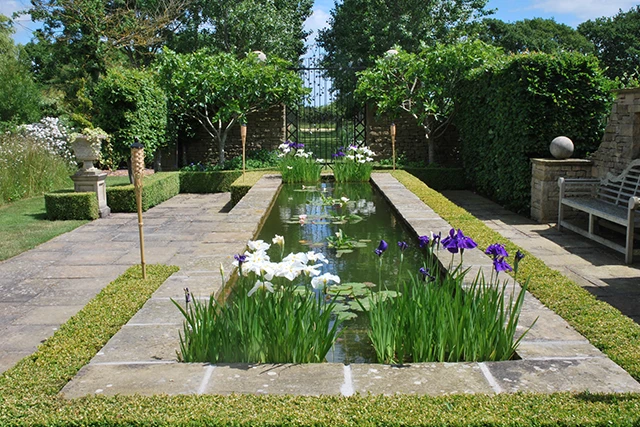
A water garden is a pond brought to life: aquatic plants, koi or goldfish, a naturalistic edge, and the gentle movement of water that turns a yard into a retreat. But a living water feature is a small ecosystem, and keeping it healthy takes more than digging a hole and adding plants.
In Northern California’s climate — hot foothill summers and cool wet winters — a water garden has to be designed to stay balanced year-round. CCS builds water gardens that combine the engineering and the biology: the filtration, circulation, and planting shelves a living feature needs to stay clear, healthy, and low-maintenance.
CCS provides water garden design and construction throughout Amador, Calaveras, El Dorado, Sacramento, and San Joaquin Counties.
Every water garden begins with thoughtful planning. The size, location, sunlight, surrounding landscape, and intended use all influence how the feature will perform throughout the year.
Careful planning creates a water feature that complements the property while supporting a healthy aquatic environment.
A water garden functions as a complete system rather than a single structure. Each component contributes to maintaining clean water and supporting aquatic life
Each feature is designed to work together so the water garden remains attractive while requiring less ongoing maintenance.
Every project follows a structured installation process.
The water garden shape, depths, and planting zones are established according to the approved design.
The excavation is completed before installing the liner or structural shell.
Pumps, filtration systems, skimmers, biofalls, and circulation components are installed to support water quality.
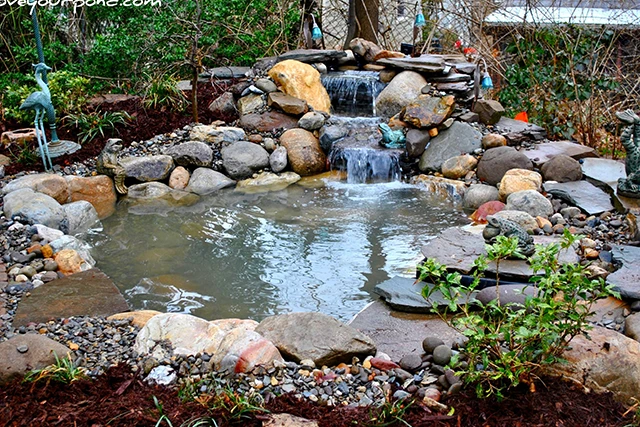
Natural stone, gravel, aquatic plants, waterfalls, and aeration systems are added to complete the living environment.
A properly designed water garden should remain balanced throughout changing seasons.
Designing these elements together helps reduce algae growth, improves water clarity, and supports a healthier ecosystem over time.
A pond is primarily a body of water, while a water garden is designed as a living ecosystem that combines aquatic plants, water movement, filtration, and often fish.
Yes. The depth, filtration, circulation, and aeration are designed to provide a healthy environment for aquatic life.
Poor filtration, inadequate circulation, excess nutrients, or excessive sunlight commonly contribute to algae growth.
In many cases, yes. Additional planting shelves, filtration, circulation, and other improvements can transform an existing pond into a balanced water garden.
When properly designed, the system is intended to stay naturally balanced, reducing the amount of ongoing maintenance required.
From site preparation to final construction, we create strong homes, business spaces, and property upgrades built for lasting value.
2026 © Comprehensive Construction Services website Developed & Powered by MYAIO


